Tuesday, November 1, 2016

Week 6: Group Proposal


Introduction: 

‘The Visualla’ (the walking canvas) is technologically savvy equipped with moods when temperature changes. With various designs in place, we aim to brighten up your day rain or shine.


Temperaments: 
Our umbrella reacts accordingly to the temperature of the weather so users can use it whenever and wherever. Apart from shielding rain, it will come in handy when the sun rays get too tough.

Thermochromic pigment
  • Activation temperatures : -15C ~ 70C
  • Heat resistant: Max anti-temperature can go up to 280 degree


Mobile App:
Choose presets or “moods” beforehand so users don’t have to meddle with their phones upon using the umbrella.

DIY own designs on top of presets/moods

weather prediction: app connected to The Weather Channel
“moods”

Easy accessibility:
Users can simply switch on the activation button at the handle of the umbrella or the app on their phones upon downloading it.


Layout Examples

6a9446a96f9568ce29f401cec4cec0fe.jpg41740672a2ae2a0050be19026d983561.jpg


Ref: https://www.youtube.com/watch?v=Ed0TwULyl6o


Materials Needed

  • Thermochromic pigment: changing color by its activation temperature (eg. mood rings)
  • Hydrochromic Screen Printing Ink: white when dry and clear when wet, once the hydrochromic ink dries it goes white again  - to hide messages, colours and text. (for DIY)
  • Motion sensor


Reference:
PILEUS - The Internet Umbrella

Image Ref: http://www.coin-operated.com/2010/05/04/umbrella-net-2004/

Main Functions:
Photo-sharing and 3D Map Navigation

Umbrellas > Connected via Bluetooth > Miniature PCs > Public Performance Art How does the umbrella work?
Encompasses of:
large screen on the top surface
a built-in camera
a motion sensor
digital compass
GPS
connected to a major web service: Flickr API
user can take photo with a camera on the umbrella, and pictures are uploaded to Flickr in two minutes with context tags via a wireless Internet connection

+

watch photo-streams downloaded from Flickr with simple operation of wrist snapping

shows a 3D bird view around the user. User can walk-through a city comparing the 3D views and real sights, and the map is always updated by GPS and a digital compass


*provides social local-navigations and real-time in-place communications


Week 5: Singapore Night Festivals 2016

The Singapore Night Festival returns for the ninth edition this year, with the theme Inventions And Innovation. The festival takes place over four nights - 2 weekends. Organised by the National Museum of Singapore, it is expected to draw big crowds - 600,000 people went to last year's edition. The Singapore Night Festival brings a nocturnal extravaganza right in the heart of the heritage district of the Bras Basah-Bugis precinct.
There are 5 different zones as part of the Singapore Night Festival. 
Zone 1: National Museum of Singapore (Main festival zone)
Zone 2: Armenian Street (Dance parties, Experimental performances & Light installations)Zone 3: Cathay Green, SOTA & Prinsep Street (Ticketed local performances at Cathay Green, & Night Buskers)Zone 4: Festival Village (SMU Campus grounds with local bands, flea market and food kiosks)Zone 5: Singapore Art Museum, Queen Street, Waterloo Street & National Design Centre (Artistic performances & Light installations)
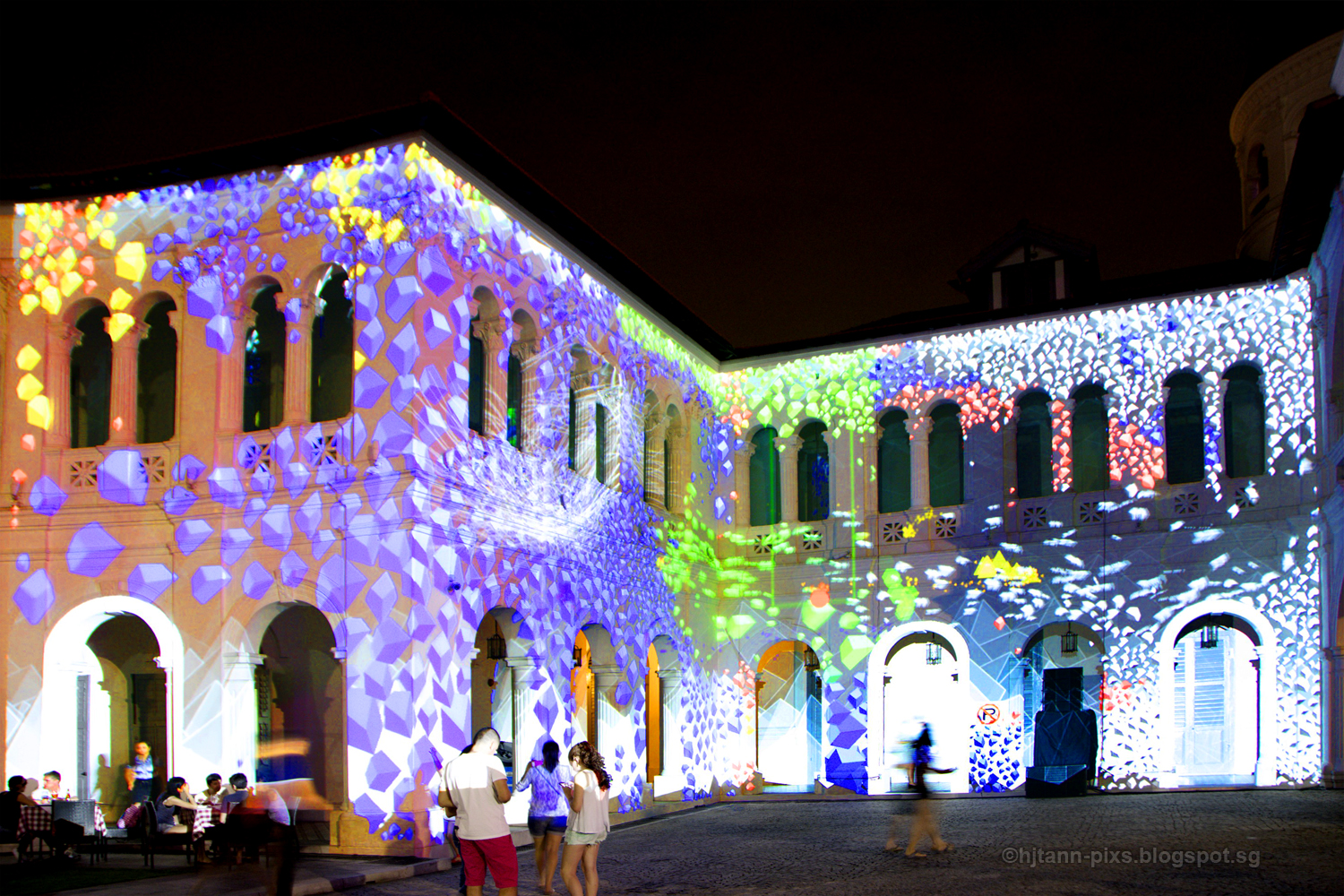
I managed to catch all the zones except zone 3. What caught my eye was apparently the centerpiece of Singapore Night Festival which was the Keyframes. It offers narrations of the city, where bodies and movement play main roles of telling a story upon the stately National Museum of Singapore facade. The blinking lights and movements of the body sticks were captivating to watch.
Through micro-stories weaved upon the stately National Museum of Singapore façade, KEYFRAMES offers narration in the city – urban stories where bodies and their movements play main roles. Part animation and part moving sculpture, the LED figures and their routine imbue static buildings with energy and excitement. This new installation – part of the KEYFRAMES series – brings glimmers of the past to life.
Image result for singapore night festival

The Singapore Night Festival is not just about visiting museums in the night, the local artworks and talents on display. Along with musical performances from modern hip-hop to drumming, there would be something interesting for visitors to explore and enjoy the arts scene in Singapore for the young and old, locals and visitors alike.


Week 4: Pileus

PILEUS: The Internet Umbrella
By Sho Hashimoto and Takashi Matsumo

The photo function is connected to a major web service: Flickr API. A user can take photo with a camera on the umbrella, and pictures are uploaded to Flickr in two minutes with context tags via a wireless Internet connection. User can also enjoy theirselves watching photo-streams downloaded from Flickr with simple operation of wrist snapping.

Pileus Internet Umbrella Pileus Flickr Umbrella 


It also has a function of 3D Map. Detecting a location data from GPS, it shows a 3D bird view around the user. User can walk-through a city comparing the 3D views and real sights, and the map is always updated by GPS and a digital compass. It aims to create natural augmented reality with a large informatin screen on the umbrella. Pileus is an umbrella connected to the internet to make walking in rainy days fun. Pileus has a large screen on the top surface, a built in camera, a motion sensor, GPS, and a digital compass. The current prototype has two main functions: photo-sharing and 3D map navigation.


Pileus with Map 

Image result for the internet umbrella

Image result for the internet umbrella

Image result for the internet umbrella

Image result for the internet umbrella

Image result for the internet umbrella

These two functions can be switched by simply fliping a switch. As a future direction of its development, putting a context data on the Internet (e.g. geo-tags on photos), it will be able to provide social local-navigations and real-time in-place communications. The product aims to provide an augmentation of everyday life synchronizing information on the Internet and the real place. 

It is interesting to browse the 'future' while in the rain however in my opinion the user might bump into people while walking and it is not safe or feasible even to use the umbrella especially under rain.

reference:
http://www.pileus.net/
http://www.pcmag.com/slideshow_viewer/0,3253,l=204409&a=204399&po=4,00.asp


Week 3: Pipilotti Rist


Pipilotti Rist was born on June 21, 1962 in Rheintal, Switzerland.

Her focus is video/audio installations because there is room in them for everything (painting, technology, language, music, movement). Her opinion on art is to contribute to evolution, to encourage the mind, to guarantee a detached view of social changes, to conjure up positive energies, to create sensuousness, to reconcile reason and instinct, to research possibilities and to destroy clichés and prejudices. 


Rist's works have been exhibited widely at museums and festivals throughout Europe, Japan and the US, including the biennials in Sao Paulo, Venice, Istanbul, the Caribbean and Santa Fe. In 2000 the Public Art fund NY commission Open My Glade, was shown on the screen in Times Square. Pipilotti Rist's multimedia video works such as, I'm Not The Girl Who Misses Much (1986)‚ Yoghurt on Skin, Velvet on TV (1995)‚ Sip My Ocean (1996), and Remake of the Weekend (1998), blur the boundaries between visual art and popular culture and explore the unfamiliar in the everyday. Her lush, seductive images recruit the idiom of commercial advertising and music videos to create a highly individual artistic language informed by her past in a music band and as a set designer.

Pipilotti Rist
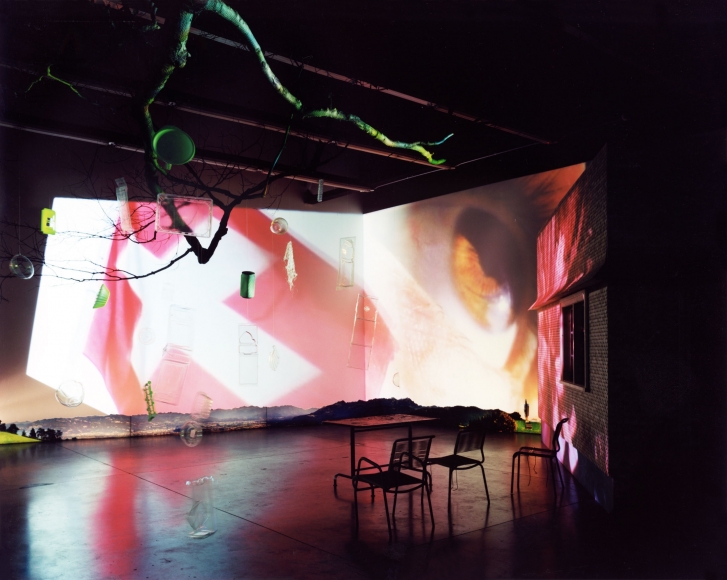
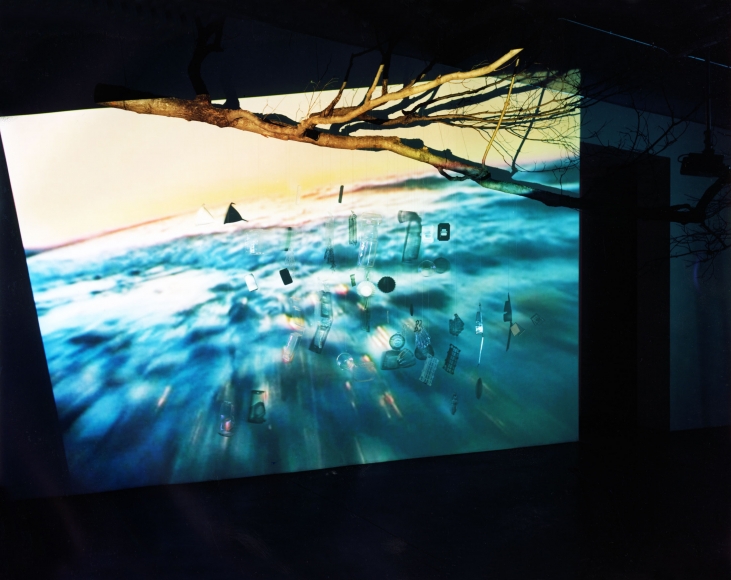
Herbstzeitlose: (Saffron Flower or Fall Time Less)
Installation view
Luhring Augustine, 2003

Pixelwald (Pixelforest)\

Worry Will Vanish Horizon

Gnade Donau Gnade2

Image result for ever is all over


Pipilotti Rist, "Ever is Over All," 1997

Image result for ever is all over


My initial impression of Rist's work was that it gave off an impression of dancing on the scarcely finely line between what is art and what is definitely not. A decent segment of her art is hard to comprehend – In I'm Not the Girl Who Misses Much, for example, Rist moves around half nude singing "I'm not the young lady who misses much" at an earsplitting pitch. In the wake of perusing the depiction of what she endeavors to accomplish in her art, in any case, her work turned out to be much clearer to me. I believe Rist's treatment of this line amongst workmanship and not craftsmanship is the thing that makes it compelling. The message is not promptly obvious, yet the provocative visual and sound segments make the work difficult to disregard – I wound up attempting to determine importance long after I had seen the video. Rist's MoMA establishment, Ever Is All Over, was particularly powerful in doing this. The video highlights a lady strolling down a city road, ceasing to crush in the windows of autos now and then. At a certain point a police lady stops to welcome her, then passes on. I found the cheerful state of mind of the lady to be the most fascinating part.


References:
http://www.hauserwirth.com/artists/25/pipilotti-rist/images-clips/


Tuesday, October 25, 2016

Week 2: Nam Jun Paik

Father of Video - Nam Jun Paik

Image result for nam june paik


Nam June Paik transformed video into an artist’s medium with his media-based art that challenged and changed our understanding of visual culture. As Paik wrote in 1969, he wanted “to shape the TV screen canvas as precisely as Leonardo, as freely as Picasso, as colorfully as Renoir, as profoundly as Mondrian, as violently as Pollock and as lyrically as Jasper Johns.” Paik's journey as an artist has been truly global, and his impact on the art of video and television has been profound.

Paik's initial artistic explorations of the mass media of television were presented in his first solo exhibition in 1963, Exposition of Music—Electronic Television, at the Galerie Parnass in Wuppertal, Germany. This milestone exhibition featured Paikís prepared televisions. Paik altered the sets to distort their reception of broadcast transmissions and scattered them about the room, on their sides and upside down. He also created interactive video works that transformed the viewers' relationship to the medium. With these first steps began an astonishing effusion of ideas and invention that over the next 30 years would play a profound role in the introduction and acceptance of the electronic moving image into the realm of art.


TV Garden, 1982 version. Single-channel video installation with live plants and monitors; color, sound; variable dimensions. Collection of the artist. © The Estate of Peter Moore/VAGA, NYC.

Nam June Paik, 1986. Photo by Rainer Rosenow.


TV Clock, 1989 version. Twenty-four manipulated color televisions; silent; variable dimensions. Santa Barbara Museum of Art, Museum Purchase with funds provided by the Grace Jones Richardson Trust, Wendy and Elliot Friedman, Lillian and Jon B. Lovelace, Leatrice and Eli Luria, Zora and Les Charles, and Lord and Lady Ridley-Tree.


Magnet TV, 1965. Television and magnet; black-and-white, silent; variable dimensions. Whitney Museum of American Art, New York, Purchase, with funds from Dieter Rosenkranz 86.60a-b. © The Estate of Peter Moore/VAGA, NYC.

Through television projects, installations, performances, collaborations, development of new artists' tools, writing, and teaching, he has contributed to the creation of a media culture that has expanded the definitions and languages of art making. Park's life in art grew out of the politics and the anti-art movements of the 1950s, 1960s and 1970s.


I feel that Paik has reshaped our perceptions of the temporal image in contemporary art. In much of his art, Paik uses technology to say something about nothing — about words, and information, and connectivity going away — and that takes mastery, too.


References: 

http://pastexhibitions.guggenheim.org/paik/
http://www.nytimes.com/2014/09/05/arts/design/nam-june-paiks-work-at-asia-society.html?_r=0
https://www.arts.gov/photos/nam-june-paik-artist-who-invented-video-art